
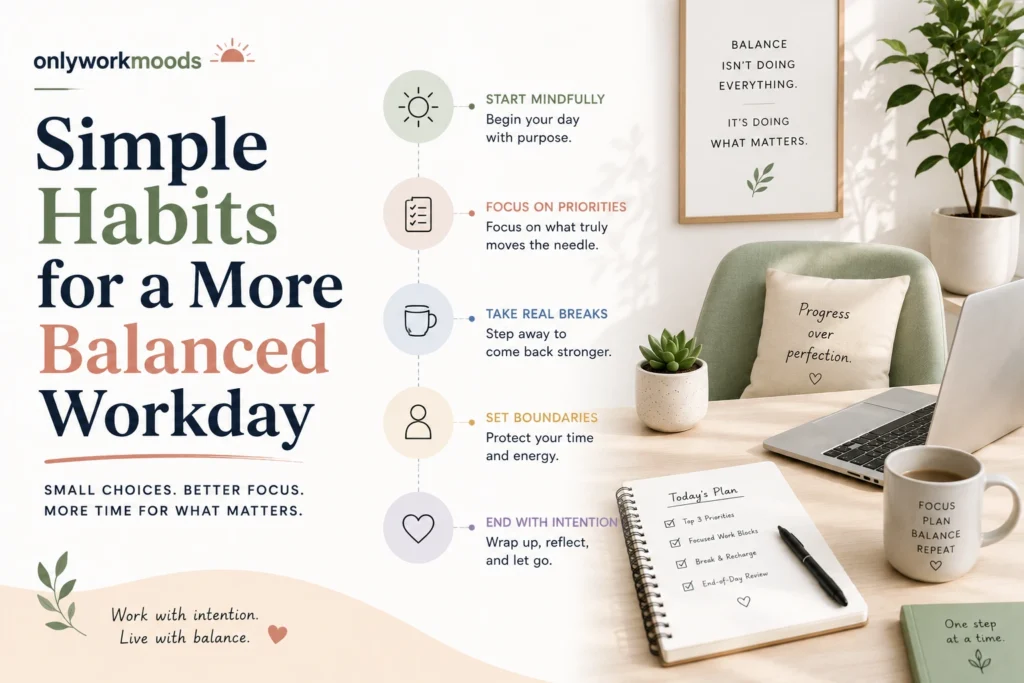
OnlyWorkMoods: Simple Habits for a More Balanced Workday.
Introduction
A better workday does not always come from adding another productivity tool or creating a stricter schedule. Sometimes, the biggest improvements come from small habits that make everyday work easier to manage. Knowing when to focus, how to organize tasks, and when to step away can change the way a normal workday feels.
OnlyWorkMoods is about approaching work with greater awareness and practicality. Instead of trying to stay busy from morning until evening, the goal is to create habits that help you use your attention more deliberately while leaving enough flexibility for unexpected tasks.
Whether you work from home, in an office, or across different locations, a few thoughtful changes can make your routine feel less chaotic. This guide looks at simple habits you can introduce without completely changing the way you work.
What Makes a Workday Feel More Manageable?
A manageable workday is not necessarily one where everything gets finished.
Projects can take longer than expected, meetings can change plans, and new requests can appear during the day. What matters is having enough structure to respond without losing sight of your main responsibilities.
A practical workday usually includes:
- Clear priorities
- Reasonable expectations
- Time for concentrated work
- Space for smaller tasks
- Breaks between demanding activities
- A simple way to track unfinished work
- A clear transition at the end of the day
These elements can create structure without making your schedule feel restrictive.
1. Begin With a Quick Workday Check-In
Before immediately opening email or messages, take a moment to look at the day ahead.
Ask yourself:
- What needs my attention today?
- Are there any deadlines?
- What task would be most valuable to complete?
- Are there meetings I need to prepare for?
- Is anything likely to interrupt my original plan?
This does not need to take long.
The purpose is simply to understand your day before other people’s requests begin shaping it.
2. Choose One Main Task
Having several priorities is useful, but choosing one main task can provide additional clarity.
Your main task should be something meaningful rather than simply something easy to check off.
For example, instead of saying:
“Answer emails.”
You might choose:
“Complete the first draft of the project proposal.”
Emails can still be handled, but the major objective remains visible.
This approach helps prevent smaller tasks from consuming all of your available attention.
3. Keep a Separate List for Small Tasks
Not every task deserves a place beside your biggest priorities.
Create a separate list for smaller jobs such as:
- Sending routine emails
- Updating documents
- Filing information
- Scheduling appointments
- Checking simple requests
- Completing administrative work
This prevents small tasks from competing mentally with major projects.
When you have a suitable gap in your schedule, you can work through several of them together.
4. Reduce Unnecessary Task Switching
Moving between unrelated tasks can make work feel fragmented.
For example, you might spend ten minutes writing, switch to email, check a message, open a document, return to writing, and then respond to another notification.
Instead, when possible, group similar activities.
Try grouping:
Communication: Emails, messages, calls
Creative work: Writing, design, brainstorming
Administrative work: Forms, documentation, updates
Planning: Scheduling, reviewing projects, setting priorities
This creates a more organized rhythm throughout the day.
5. Make Your Digital Workspace Easier to Navigate
Digital clutter can become just as distracting as physical clutter.
You may have dozens of browser tabs open, files scattered across folders, or multiple versions of the same document.
A simple digital organization system can help.
Consider creating:
- One folder for current projects
- One location for frequently used documents
- Clearly named files
- Separate folders for completed work
- Bookmarks for frequently visited resources
The goal is not perfection.
The goal is being able to find what you need without unnecessary searching.
6. Create a “Do Not Disturb” Period
Focused work can be difficult when notifications appear constantly.
If your role permits it, establish a period where non-essential notifications are minimized.
During this time:
- Close unnecessary tabs
- Silence non-essential alerts
- Put your phone away if appropriate
- Work on one clearly defined task
- Avoid checking unrelated platforms
Even a relatively short uninterrupted period can give you room to make meaningful progress.
7. Give Meetings a Purpose
Meetings can easily become a large part of a working day.
Before joining a meeting, understand why it is happening and what you are expected to contribute.
Useful questions include:
- What is the purpose of this meeting?
- Do I need to prepare anything?
- What decision needs to be made?
- What should happen afterward?
When meetings have a clear purpose, it becomes easier to connect them to actual work rather than treating them as isolated events.
8. Don’t Fill Every Empty Space
An empty space in your calendar does not always need to be filled.
Leaving some flexibility can be useful because work rarely happens exactly according to plan.
Unexpected requests, technical issues, additional research, and follow-up tasks can appear during the day.
A schedule with no breathing room can quickly become stressful.
Instead, leave some space between major commitments when possible.
9. Use Breaks to Change Your Environment
A break can be more refreshing when you actually step away from the task.
Instead of immediately switching from your work screen to another screen, try something different.
You could:
- Walk around
- Get some water
- Stretch
- Step outside
- Have a short conversation
- Simply sit somewhere away from your workspace
The objective is to create a genuine pause.
10. Pay Attention to Your Work Environment
Your surroundings can influence how easy it is to concentrate.
This does not mean you need an expensive office setup.
Simple changes may include:
- Keeping your desk reasonably clear
- Improving lighting where possible
- Keeping essential materials nearby
- Reducing unnecessary background distractions
- Creating a consistent location for focused work
For remote workers, having even a small area associated primarily with work can make transitions between work and personal activities clearer.
11. Build a Routine Around Your Actual Responsibilities
There is no single perfect work schedule.
Someone working in customer service may need to stay available for frequent communication. A writer may need longer periods of uninterrupted concentration. A manager may have a calendar dominated by meetings.
Your routine should reflect your actual responsibilities.
For example:
| Work Style | Useful Habit |
|---|---|
| Remote work | Create clear start and finish routines |
| Creative work | Protect longer focus periods |
| Administrative work | Group repetitive tasks |
| Client-facing work | Set communication windows where possible |
| Management | Reserve time for planning and follow-up |
| Study or training | Alternate focused learning with breaks |
The important part is adapting the routine rather than forcing your work into someone else’s system.
12. Learn to Say “Not Right Now”
Being helpful does not mean responding immediately to every request.
Sometimes a request is valid but simply cannot be handled at that moment.
A professional response might be:
“I can take a look after I finish this task.”
Or:
“I can work on that this afternoon.”
This creates a boundary without rejecting the request.
When appropriate, communicating your availability clearly can help protect important work.
13. Keep a Short “Tomorrow” List
At the end of the day, write down the first few things you need to remember for tomorrow.
This could include:
- A project that needs continuation
- A person you need to contact
- A deadline
- A document that needs review
- A meeting that requires preparation
This small habit reduces the need to remember everything overnight.
It also gives you a clearer starting point when you begin working again.
14. Don’t Confuse Busyness With Progress
A full calendar can create the impression that you had a productive day.
But meetings, messages, emails, and administrative tasks do not always represent progress toward your most important goals.
Ask yourself:
What meaningful work did I move forward today?
The answer can be more useful than simply counting how many tasks you completed.
15. Create a Clear End to Your Workday
A workday needs an ending just as much as it needs a beginning.
If possible, create a small closing routine.
Try this:
- Review completed tasks.
- Move unfinished tasks to another day.
- Check tomorrow’s priorities.
- Close work-related documents.
- Organize your workspace.
- Step away from work.
You do not need to finish everything before stopping.
Sometimes the most productive decision is knowing what can wait.
A Simple OnlyWorkMoods Daily Framework
You can combine these habits into a straightforward routine.
Before work
- Check your schedule.
- Identify deadlines.
- Choose your main task.
- Prepare your workspace.
During focused work
- Work on one priority.
- Reduce unnecessary interruptions.
- Keep smaller tasks separate.
During the middle of the day
- Handle communication.
- Complete administrative work.
- Take meaningful breaks.
- Reassess priorities if circumstances change.
Before finishing
- Review what you accomplished.
- Record unfinished tasks.
- Choose tomorrow’s starting point.
- Close your work environment.
This structure is flexible enough to adapt to different types of work.
How to Know Whether Your Routine Is Working
Give your routine some time before deciding whether it is useful.
Look for practical signs such as:
- You know what to work on when you start the day.
- Important tasks receive enough attention.
- You spend less time searching for information.
- You are interrupted less often during focused work.
- Your task list feels more manageable.
- You can finish work without constantly thinking about what you forgot.
If something consistently creates more stress instead of reducing it, adjust it.
A routine should support your work, not become another task you have to manage.
Common Mistakes When Building Better Work Habits
Making the routine too complicated
You do not need ten productivity apps and an elaborate tracking system to organize your day.
Trying to copy someone else’s schedule
A routine that works for another person may not fit your responsibilities.
Scheduling every minute
Unexpected work happens. Leave some flexibility.
Ignoring breaks
Constant work is not the same as effective work.
Changing everything at once
Start with one or two habits and build gradually.
FAQ
What is the easiest way to improve a workday?
The easiest starting point is to choose one important task before the day becomes filled with smaller requests. Once that priority is clear, organize communication and smaller tasks around it where your role allows.
How can I stay focused while working?
Reduce unnecessary interruptions and give one important task your full attention for a defined period. Closing unrelated tabs, silencing non-essential notifications, and keeping your workspace organized can also help.
Should I create a strict daily schedule?
A flexible schedule is often more practical than a completely rigid one. Give important tasks dedicated time while leaving enough room for unexpected work and changing priorities.
How can I make remote work feel more organized?
Create consistent start and end routines for your remote workday. Keeping a dedicated workspace and separating work activities from personal activities where possible can also make the transition easier.
What should I do when my task list becomes overwhelming?
Separate essential tasks from tasks that can wait. Choose the most important item, work on it first, and move lower-priority tasks to a realistic later time rather than trying to handle everything simultaneously.
How can I finish my workday without thinking about unfinished tasks?
Write down unfinished tasks and decide when they should receive attention next. Having a clear plan for tomorrow can make it easier to mentally step away from work.
Conclusion
A better workday is rarely created by one dramatic productivity change. It usually comes from small habits that make work easier to navigate: choosing meaningful priorities, reducing unnecessary interruptions, organizing digital and physical spaces, taking proper breaks, and creating a clear end to the day.
OnlyWorkMoods is ultimately about finding a way of working that feels practical and sustainable for your own responsibilities.
You do not need to change your entire routine tomorrow. Start with one habit that addresses your biggest daily challenge, see how it works, and build from there.