TheSindi.com: A Closer Look at Its Articles, Editorial Approach and Online Credibility.
Introduction
Finding useful information online is easy. Finding information that is clear, relevant and worth trusting can take more effort. Websites covering several subjects can be particularly useful because readers can explore different interests in one place. However, it is still important to understand what a website publishes and how to assess its content.
TheSindi.com is a general-interest digital publication that covers subjects such as technology, finance, business, education, health, lifestyle and other everyday topics. It provides articles and guides for readers looking to understand a wide range of subjects without visiting a specialist website for every question.
The site is worth examining from two perspectives: the range of information it publishes and the way readers should evaluate that information. This guide explores its content, website identity, editorial approach, potential uses and practical checks that can help readers make informed decisions.
What Is TheSindi.com?
TheSindi.com is an online publishing website rather than a dedicated software application, shopping platform or financial service. Its content is organised around articles, guides and explainers covering multiple areas of interest.
The website’s stated identity centres on providing accessible information to a general audience. Instead of concentrating on one specialist subject, it brings together topics that may interest students, professionals, business owners and everyday readers.
For example, a visitor researching a technology question may also find articles about personal finance, business operations or lifestyle subjects. This broad approach gives the website scope to serve readers with different information needs.
However, a multi-topic publication should not automatically be treated as an expert source in every category. The quality of each article, its references, publication date and author information matter when deciding whether its advice is suitable for a particular situation.
What Topics Does TheSindi.com Cover?
TheSindi.com has been associated with several broad content categories. These sections help readers explore subjects according to their interests rather than relying only on individual search results.
1. Technology and Digital Trends
Technology is a broad subject that changes frequently. Readers may look for information about artificial intelligence, software, cybersecurity, websites, digital tools and developments affecting everyday technology use.
Articles in this area can help beginners understand unfamiliar terms and learn how particular technologies work.
For instance, someone exploring artificial intelligence might first need a straightforward explanation of how AI tools are used. A business owner may instead want to understand how digital platforms support customer communication or daily operations.
When reading technology content, check whether the article reflects current developments. Software features, security recommendations and product specifications can change, so older explanations may need additional verification.
2. Finance and Personal Money Management
Financial information is another subject commonly associated with TheSindi.com.
Readers often search for explanations of budgeting, savings, loans, investing and other money-related topics. A well-structured introductory article can make unfamiliar financial terms easier to understand.
However, there is an important distinction between financial education and personal financial advice.
A general article may explain how a loan works or introduce the basics of investing. It cannot automatically account for an individual’s income, financial commitments, risk tolerance or local regulations.
Use introductory content to understand a subject, then consult official financial institutions, regulators or qualified professionals before making significant financial decisions.
3. Business and Entrepreneurship
Business content can be relevant to people starting a company, managing an existing organisation or exploring professional opportunities.
Common areas of interest include:
- Starting and managing a small business.
- Understanding online business models.
- Improving customer communication.
- Exploring marketing and digital promotion.
- Learning about business technology.
- Understanding freelancing and professional services.
These subjects can provide useful starting points for readers who want to explore an idea before taking action.
For example, someone considering an online business may begin by researching different business models. They can then compare the information with market conditions, operating costs and requirements in their location.
Business advice should always be assessed in context. A strategy that works for one industry or country may not suit another.
4. Education and Learning Resources
Education-related content can support readers who want to understand academic subjects, explore learning opportunities or develop professional knowledge.
Students may look for explanations of unfamiliar concepts, while working professionals may be interested in improving their digital or business skills.
Articles in this category are most useful when they explain ideas clearly and direct readers towards reliable learning materials.
For academic work, it is important to check original research, official education resources and institutional publications rather than relying entirely on a general-interest blog.
5. Health and Wellbeing
Health is another area where readers need to be especially careful about the information they follow.
General health articles may introduce topics such as nutrition, exercise, sleep and everyday wellbeing. They can help readers become familiar with common concepts and identify questions they may want to discuss with a healthcare professional.
However, health information should not replace medical assessment, diagnosis or treatment.
Before following health-related recommendations, check whether the article refers to credible medical organisations or research. Be cautious about claims promising guaranteed results, miracle treatments or quick solutions to complex health concerns.
6. Lifestyle, Law and Other Everyday Topics
TheSindi.com has also been associated with lifestyle, legal, travel and other general-interest subjects.
These areas cover a wide range of everyday questions. Lifestyle content may discuss productivity, personal organisation and daily habits. Legal articles may explain general concepts, while travel content can introduce destinations, planning considerations and practical information.
Readers should remember that laws, travel requirements and public policies vary by location and can change over time.
For these subjects, the publication date and relevance to the reader’s country are particularly important.
How Is TheSindi.com Organised?
A multi-topic website needs a structure that makes it easy to find relevant information.
Category navigation is one way to organise a large collection of articles. Instead of searching through every published page, readers can begin with a subject that matches their interests.
A typical visit to a content publication may involve the following steps:
- Open the website and review its main navigation.
- Select a category related to the subject you want to explore.
- Browse article headlines to identify relevant information.
- Open an article and check its publication or update date.
- Review the article’s sources and author information.
- Follow reliable references if you need more detailed information.
The exact layout and available navigation features may change as the website develops. Readers should use the live website to confirm its current menu, categories and article availability.
Understanding TheSindi.com’s Editorial Approach
A website’s editorial approach can tell readers how its content is intended to be researched, prepared and maintained.
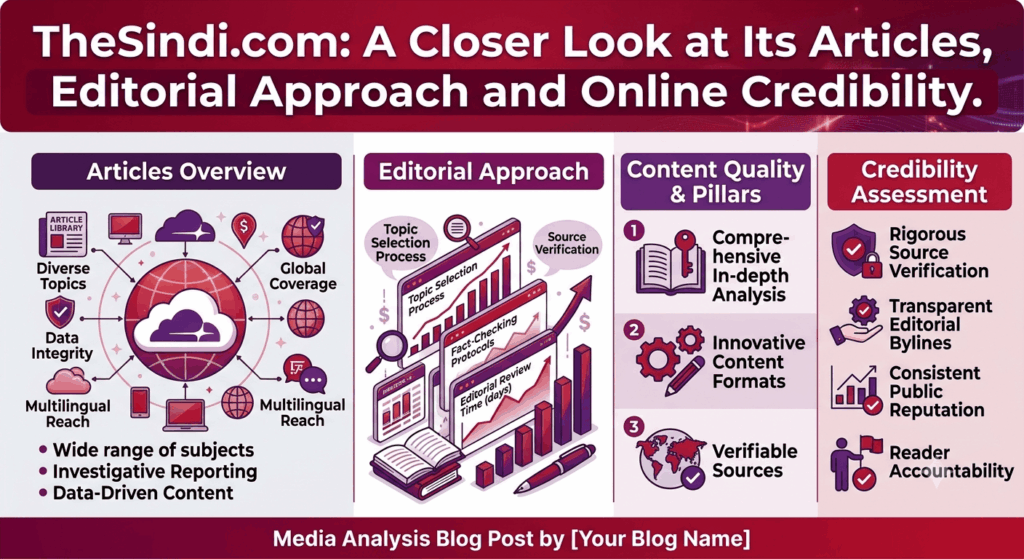
TheSindi.com’s publicly described editorial information refers to research, writing and editorial review. Its stated approach also discusses using credible references and reviewing material before publication.
These statements are useful when understanding how the publication presents its work. However, an editorial policy is not independent proof that every article meets the same standard.
Readers should assess individual articles rather than assuming that all content is equally accurate.
Check the Author and Publication Date
Start by checking who wrote the article and when it was published.
Author information can help readers understand who is responsible for a particular piece. The publication date is equally important for subjects that change frequently.
An article about a general historical concept may remain useful for years. A guide to financial regulations, software features or travel requirements may become outdated much sooner.
Look for Supporting Sources
Reliable articles should make it possible to examine important claims.
For example, a financial explanation may refer to a regulator or official financial institution. A health article may point towards recognised medical organisations or published research.
If an article makes a significant claim without providing supporting evidence, look for confirmation elsewhere.
Separate Explanation From Recommendation
There is a difference between explaining how something works and telling someone what they should do.
A general article can introduce investment terminology, describe a business strategy or explain a health topic. Personal decisions require additional information that a broad publication may not have.
Understanding this difference helps readers use online articles appropriately.
Is TheSindi.com Useful for Everyday Readers?
The usefulness of a website depends on what a visitor wants to achieve.
A multi-niche publication can be a convenient starting point for people who enjoy exploring different subjects. It may also help readers understand unfamiliar terminology before moving on to more specialised sources.
Here are a few examples of how different readers might use it.
| Reader | Possible use |
|---|---|
| Students | Explore introductory explanations and learning topics |
| Business owners | Research general business and marketing concepts |
| Professionals | Read about technology and workplace developments |
| General readers | Explore finance, lifestyle and everyday subjects |
| Technology enthusiasts | Discover introductory technology-related information |
The main advantage of a broad publication is variety. Readers do not need to visit a separate specialist blog every time they want to explore a different subject.
The limitation is depth and authority. A general-interest article may not provide the technical detail, professional assessment or primary evidence needed for a high-stakes decision.
How to Evaluate Information Published on TheSindi.com
It is sensible to apply the same evaluation process to TheSindi.com that you would use for any other online publication.
1. Check the Exact Website Address
Search results can display websites with similar names. Before reading or sharing an article, confirm that the address is the intended domain.
The website discussed in this article is thesindi.com. Do not assume that another website with a similar name, extra wording or a different domain extension belongs to the same publisher.
2. Review the Article’s Evidence
Look beyond the headline and introduction.
Check whether the article provides references, links to original sources or enough detail to support its main points. This is particularly important when the content involves money, health, law or safety.
3. Compare Important Claims
If an article makes a claim that could affect an important decision, compare it with information from an official or specialist source.
For example:
- Check government websites for laws and public regulations.
- Use recognised medical organisations for health information.
- Consult financial regulators for investment and consumer finance information.
- Refer to official product documentation for technical specifications.
This extra step can help identify outdated explanations or missing context.
4. Consider the Publication Date
An article may have been accurate when first published but may no longer reflect current conditions.
Look for an original publication date and any visible update date. If neither is available, be more cautious when using the information for a time-sensitive decision.
5. Be Careful With Personal Information
Reading an article does not normally require sharing sensitive personal details.
Avoid entering banking information, passwords, identity documents or payment details into forms that are unrelated to the purpose of the website.
Also, do not download unfamiliar files or install browser extensions simply because an article suggests doing so.
TheSindi.com and Similarly Named Websites
One common source of confusion is the presence of multiple websites using similar versions of the same name.
A domain name is a website’s online address. Even a small difference can lead to a completely separate website with different content, operators and policies.
For example, TheSindi.com should not be confused with The-Sindi.com or other websites using similar names.
A similar name does not establish shared ownership, editorial responsibility or an official relationship.
Before relying on information about a publisher, check the domain directly. Its About, Contact, Privacy and Editorial Policy pages can help clarify how the website describes itself.
This is especially important when reading third-party reviews. An article discussing a similarly named website may not describe the publication you intended to visit.
What Readers Should Know Before Relying on TheSindi.com
TheSindi.com can be approached as a general source for discovering articles and introductory information. That does not mean every article should be treated as professional guidance.
Keep these points in mind:
- Use it for initial research: General explainers can help introduce unfamiliar subjects.
- Check the evidence: Important claims should be supported by reliable references.
- Look at the date: Recent information matters for changing topics.
- Verify specialist advice: Confirm health, legal and financial information with appropriate professionals or official organisations.
- Confirm the domain: Make sure you are visiting the intended website.
- Read critically: Consider whether the article explains its limitations and provides enough context.
These habits are useful across the internet, not just on one publication.
Conclusion
TheSindi.com is a multi-topic online publication that brings together information across technology, business, finance, education, health, lifestyle and other areas. Its broad subject coverage can make it a useful starting point for readers who want to explore unfamiliar topics without limiting themselves to one niche.
However, the value of any content website depends on the quality and relevance of its individual articles. Readers should check publication dates, review supporting references and confirm important claims through official or specialist sources.
The best approach is to use TheSindi.com for discovery and general understanding while applying the same critical reading habits you would use with any online information source. That way, you can explore a wider range of subjects without relying on unverified claims.
What is TheSindi.com?
TheSindi.com is a general-interest digital publication that provides articles and guides across several subjects, including technology, finance, business, education, health and lifestyle.
What type of content can readers find on TheSindi.com?
The website has been associated with explainers, practical guides and informational articles covering different areas of everyday interest. Its subject range includes technology, business, finance, education, health, lifestyle and other topics.
Is TheSindi.com a software application?
TheSindi.com is primarily an online content publication. It should not be confused with a dedicated software product, shopping marketplace or financial application.
Is TheSindi.com suitable for beginners?
Its general-interest format and explanatory content may be useful for readers who want an introduction to unfamiliar subjects. However, beginners should still check important claims against reliable specialist sources.
Can I use TheSindi.com for financial or health advice?
You can use relevant articles to learn about general concepts. However, do not treat them as personalised financial or medical advice. Consult qualified professionals and recognised sources before making important decisions.