Troozer.com: Exploring Its Digital Publishing Model, Content Categories and Reader Experience.
Introduction
The internet gives readers access to information on almost every subject. From technology and finance to business, education and lifestyle, people can explore different topics without relying on traditional publications alone. However, not every website has the same purpose. Some provide online services, others sell products, while many focus entirely on publishing articles.
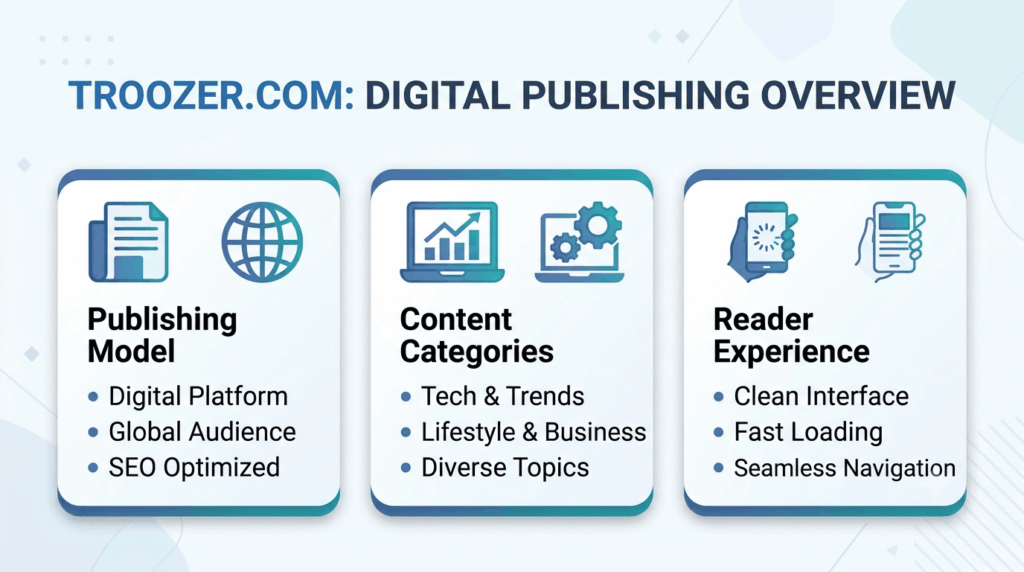
Troozer.com belongs to the digital publishing category. It describes itself as a digital media and publishing platform that shares editorial content across several subject areas. Its purpose is to provide readers with information rather than operate as an online marketplace, financial service or software application.
This distinction is important because online descriptions of Troozer sometimes present different explanations of what the website does. Understanding its actual publishing focus can help readers avoid confusion and use the website more appropriately.
In this guide, we explore Troozer.com’s identity, its content categories, the difference between publishing and digital services, its potential value for readers and the checks worth making before relying on online information.
What Is Troozer.com?
Troozer.com is a multi-category digital media and publishing platform. In simple terms, it is a website focused on sharing editorial content across different subjects.
Rather than concentrating on one specialist area, its stated publishing scope includes technology, finance, business, health, education, lifestyle, travel, law, home improvement and real estate.
This broad approach gives the publication room to cover different interests. Someone researching a business topic may also find information about technology or personal development. Similarly, a reader interested in lifestyle subjects can explore other categories without limiting their visit to one particular niche.
Troozer’s public description also makes an important distinction about its purpose. It identifies the website as a publishing platform, not a marketplace, financial service or software tool. It states that the platform does not provide transactions or payment systems and does not require mandatory account creation to access its content.
For readers, this means Troozer.com should primarily be approached as a place to discover and read information.
What Type of Content Does Troozer.com Cover?
A multi-topic publication can appeal to different audiences because it brings several subject areas together. Troozer’s stated categories cover a mixture of professional, educational and everyday interests.
Here is a closer look at the main areas associated with the platform.
1. Technology and Digital Developments
Technology continues to influence how people work, communicate, study and manage everyday tasks. Readers often search for explanations of new software, digital platforms, online security and emerging technologies.
Technology-related publishing can help introduce these subjects in an accessible way.
For example, a beginner may want to understand how artificial intelligence works. A small business owner might be interested in digital tools that support customer communication or online operations.
Articles in this category can serve as a starting point for learning. However, technical information should be checked against current documentation when it involves software features, security settings or product specifications.
2. Finance and Money-Related Information
Finance is another broad category within Troozer’s stated publishing scope.
People regularly look for information about saving, budgeting, financial planning, loans and investment concepts. General articles can explain terminology and introduce readers to subjects they may not have explored before.
For instance, someone learning about personal budgeting may benefit from a basic explanation of income, expenses and savings goals.
Still, financial content needs careful consideration. General educational information is not the same as advice based on an individual’s financial circumstances.
Before acting on investment, borrowing or tax-related information, readers should consult official financial resources or qualified professionals.
3. Business and Entrepreneurship
Business content can be useful to entrepreneurs, professionals, freelancers and people interested in understanding how organisations operate.
Topics in this area may include business planning, digital marketing, customer relationships, entrepreneurship and professional development.
A person considering a small business, for example, may first want to understand the difference between various business models. Someone already running a company might be interested in learning about online promotion or customer engagement.
These subjects can help readers develop their understanding before making decisions.
However, business strategies do not produce identical results for every organisation. Industry conditions, competition, location, resources and customer behaviour all influence whether a particular approach is suitable.
4. Education and Learning
Educational publishing can help readers explore subjects, understand unfamiliar terms and identify opportunities for further learning.
Students may look for introductory explanations, while professionals may want to develop their knowledge outside formal education.
Clear educational articles are particularly useful when they explain a subject step by step and point readers towards additional learning resources.
For academic assignments or professional research, it is still important to check original studies, recognised institutions and official publications. A general-interest article should not automatically be treated as an academic source.
5. Health and Wellbeing
Health information is widely searched online, but it is also one of the areas where accuracy matters most.
General health and wellbeing articles can introduce subjects such as nutrition, exercise, sleep and healthy routines. They may help readers understand common concepts or identify questions to discuss with a healthcare professional.
However, online articles cannot replace individual medical assessment.
Readers should be cautious about claims involving treatments, supplements, diagnoses or guaranteed health results. Important medical information should be checked through recognised healthcare organisations and qualified practitioners.
6. Lifestyle and Travel
Lifestyle and travel content covers a wide range of everyday interests.
Lifestyle articles may explore personal organisation, habits, home-related subjects and general wellbeing. Travel content can introduce destinations, planning considerations and useful information for people preparing for a trip.
These subjects can appeal to readers who enjoy discovering new ideas outside work or academic interests.
Travel information, however, can become outdated. Before making bookings or travelling internationally, confirm entry requirements, transport information and local guidance through official sources.
7. Law, Home Improvement and Real Estate
Troozer’s stated publishing categories also include law, home improvement and real estate.
These topics can be relevant to people researching property, household projects, legal concepts or practical decisions.
For example, a reader might want to understand the basics of property ownership or learn about common home maintenance considerations.
The important point is that these subjects often depend on location and individual circumstances. Laws differ between jurisdictions, property regulations can change, and home improvement work may require qualified professionals.
Use general articles to build background knowledge, then verify specific requirements before taking action.
How Does Troozer.com Differ From an Online Marketplace or Software Tool?
One reason Troozer.com attracts different descriptions online is that some third-party articles associate it with services beyond publishing.
It is useful to separate the website’s stated purpose from assumptions based on its name.
| Type of website | Main purpose | How it differs from Troozer.com |
|---|---|---|
| Digital publishing website | Shares articles and editorial information | Matches Troozer’s stated purpose |
| Online marketplace | Connects buyers and sellers or facilitates purchases | Troozer says it is not a marketplace |
| Financial service | Provides financial products or transactions | Troozer says it is not a financial service |
| Software application | Provides tools or interactive software features | Troozer says it is not a software tool |
| E-commerce store | Lists products and handles orders or payments | This is not Troozer’s stated function |
This distinction matters when researching the platform.
A website can publish articles about artificial intelligence without being an AI application. It can cover finance without offering banking or investment services. Likewise, publishing content about online shopping does not make a website an e-commerce store.
Readers should look at what a platform actually provides rather than relying on labels used by unrelated websites.
Who May Find Troozer.com Useful?
Because Troozer covers several subjects, its potential audience is not limited to one professional group.
Different readers may approach the publication with different goals.
| Audience | Possible reason to explore the website |
|---|---|
| Students | Discover introductory information about different subjects |
| Business owners | Explore general business and technology topics |
| Professionals | Read about developments outside their specialist field |
| General readers | Browse lifestyle, travel and educational content |
| Technology enthusiasts | Explore articles about digital developments |
| Homeowners and property readers | Discover general home improvement and real estate information |
The website’s broad subject range can make it useful for casual reading and initial research.
However, readers looking for detailed technical instructions, professional advice or academic evidence may need more specialised sources.
How to Get More Value From a Digital Publishing Website
Reading an online article is only the first step. The way you use the information determines whether it becomes genuinely useful.
Here are some practical habits that can improve your experience when exploring Troozer.com or any similar publication.
Start With a Clear Question
Before browsing, identify what you want to learn.
For example, instead of searching broadly for business information, you might want to understand how a small business attracts customers online.
A specific question makes it easier to identify relevant articles and avoid spending time on unrelated topics.
Choose the Most Relevant Category
Use the website’s available subject sections to narrow your reading.
If you are researching technology, begin with technology-related content. For a question about property, look for relevant real estate or home improvement material.
The exact menu and article selection may change, so check the live website for its current navigation.
Read Beyond the Headline
Headlines are designed to attract attention, but they do not always communicate the full scope of an article.
Read the main sections, look for explanations and check whether the article actually answers your question.
Be especially careful with headlines that promise guaranteed results or make dramatic claims without supporting evidence.
Follow Useful References
If an article refers to a government regulation, research paper, product specification or professional recommendation, try to locate the original source.
Primary sources are often more useful when you need precise information.
For example, a reader researching a legal requirement should check the relevant government or regulatory website rather than relying entirely on a general blog.
Keep Track of Important Information
For research involving several subjects, it can help to save useful links and make short notes.
Record the article title, its publication date and any supporting references. This makes it easier to return to relevant information and identify details that may need updating.
How to Evaluate the Quality of Troozer.com Articles
A website’s stated purpose tells you what it aims to provide. It does not automatically establish the quality of every article.
Before relying on information from Troozer.com, consider the following checks.
Check the Author Information
Look for an author name or information about the person responsible for the article.
Author details can provide useful context, especially when the subject requires specialist knowledge.
For technical, medical, legal and financial subjects, relevant qualifications or professional experience may be particularly important.
Review the Publication Date
Some information remains useful for years, while other details can become outdated quickly.
A basic explanation of a business concept may remain relevant. A guide to a software feature, financial rule or travel requirement may need frequent updates.
If an article does not show a clear publication or update date, verify time-sensitive claims elsewhere.
Look for Reliable References
A useful article should provide enough context to help readers understand where important information comes from.
Check whether it links to original research, official websites, recognised organisations or other relevant sources.
Be cautious when important claims are presented without evidence.
Watch for Exaggerated Promises
Articles that promise instant financial success, guaranteed health improvements or effortless business growth deserve additional scrutiny.
Real-world outcomes depend on many factors. Reliable explanations should acknowledge limitations rather than present every recommendation as universally effective.
Compare Important Information
For high-impact decisions, compare an article’s claims with information from recognised sources.
Examples include government websites for legal requirements, healthcare organisations for medical information and official financial regulators for investment education.
This simple process can help reduce the risk of acting on incomplete or misleading information.
Is Troozer.com Worth Exploring?
Whether Troozer.com is worth visiting depends on the type of information you want.
Its multi-category publishing approach may appeal to readers who enjoy exploring different subjects from one website. The range of stated categories also makes it relevant to people with varied interests, from technology and business to travel and home improvement.
There are, however, some limitations to keep in mind.
A broad publication cannot be assumed to offer specialist-level detail in every category. Readers may need additional sources when researching complex subjects or making important decisions.
The most sensible approach is to use Troozer.com for content discovery and general understanding, then verify important information independently.
Conclusion
Troozer.com is best understood as a multi-category digital publishing platform rather than an online marketplace, financial service or software application. Its stated publishing scope covers technology, finance, business, health, education, lifestyle, travel, law, home improvement and real estate.
For readers, this broad approach offers an opportunity to explore different subjects through one online publication. It can be useful for discovering topics, understanding basic concepts and identifying areas for further research.
Still, the quality of information matters more than the number of categories a website covers. Check article dates, review supporting references and verify important claims through reliable sources.
Ultimately, Troozer.com is most appropriately approached as a content discovery and reading resource. Understanding that purpose helps readers set realistic expectations and make better use of the information they find online.
What is Troozer.com?
Troozer.com describes itself as a digital media and publishing platform. It shares editorial content across several categories, including technology, finance, business, health, education, lifestyle, travel, law, home improvement and real estate.
Is Troozer.com an online marketplace?
No. Troozer’s public description states that it is not a marketplace. Its stated purpose is digital publishing rather than facilitating product purchases or transactions.
Does Troozer.com provide financial services?
Troozer states that it is not a financial service. Although its publishing categories include finance, readers should not confuse financial articles with banking, investment or other financial products.
Is Troozer.com a software application?
Troozer describes itself as a publishing platform rather than a software tool. Claims that it provides a dedicated productivity workspace or software suite should not be treated as confirmed without direct evidence.
What topics does Troozer.com cover?
Its stated content categories include technology, finance, business, health, education, lifestyle, travel, law, home improvement and real estate.